| < 1914 | 1916 > |
1915
| Model: | 25 | 36/"Four-36" | "Six-46" |
| Cylinders: | 4 | 4 | 6 |
| Horsepower SAE: | 22.5 | 25.6 | 29.4 |
| Wheelbase: | 110 | 116 | 124 |
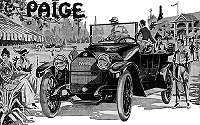
Why We Know It's the Greatest Value in the Automotive Industry, The Saturday Evening Post, Sep. 2, 1914
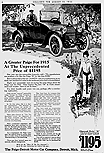
A Greater Paige for 1915, Collier's, Aug. 15, 1914
The big news for 1915 was a new six-cylinder line, consisting of the Fairfield touring car and later the Meadowbrook roadster. When Paige-Detroit first announced its 1915 models there was no mention of a Paige with a six-cylinder motor.
The Model 25 and the Model 36 were carried forward unchanged, except there were three Model 36 autos, compared to the six offered in 1914. Within a few months prices were lowered on cars in both lines. Meanwhile, company literature tempted buyers:
Every man wants to sit behind a motor car which responds eagerly – buoyantly – to the slightest touch of the throttle. The Paige owner knows that he has but to “step on” the accelerator and the hills flatten out like smooth boulevards, as his Paige swings easily up those grades that are the despair of many vastly higher priced automobiles.
Paige design means quality. It means distinctiveness, comfort, vast power and flexibility, reliability, wealth of highest grade features and amazing value. Plus, it means Economy – Economy in Purchase Price, Economy in maintenance, Economy in Operation. A Paige Car is always, everywhere an asset.
- Model 25
- Roadster, Kenilworth, $925
- Touring car, Brunswick, $925
- Model 36, later "Four-36"
In January of 1915 Paige dropped the Model 25 line entirely. Model 36 autos continued as "Four-36" models. Paige claimed the Glenwood touring car and its companion roadster had given given universal satisfaction, required no changes in design or high experimental and engineering costs, and offered either for the new, lower price of $1,075. The four-passenger Montrose Coupé was no longer advertised.
The Company modestly described the new six-cylinder Fairfield touring car as the "Ultimate Six" and the standard by which all other "Sixes" were to be judged. An article in The Horseless Age Magazine, December 23, 1914, described in detail the new touring car.
- "Six-46"
- Roadster, three-passenger, Meadowbrook, $1,395
- Touring car, seven-passenger, Fairfield, $1,395
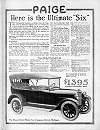
1915 "Six-46", The Saturday Evening Post, Jan. 2, 1915
The Paige-Continental engine had an aluminum crankcase and cast iron unit block with a detachable head that enabled the car to throttle down to three miles per hour in high gear, then speed up within 30 seconds to 50 miles per hour. The streamlined body on the longer 124 inch wheelbase set it apart from the semi-streamlined Model 36 of 1914, and it made the straight-dash 1913 Model 36 look old-fashioned in comparison. The Six-46 had a zig-zag, cellular radiator. In addition, the radiator was v-shaped, which was a distinctive trademark that Paige used through 1923. The company claimed to have "again set the standard of value in the moderate priced field."
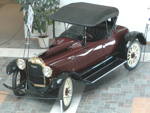
1915 6-46 Meadowbrook Roadster (Richard Kobelt photo)
The buying public and auto critics received the new, larger Paige autos very well. The trend was definitely toward six-cylinder cars. During the course of the year further enhancements were made to the original "Six-46" models. The bodies were done in Richelieu Blue, and the wheels were now finished in a deep, rich red. A narrow bead of red added a touch of distinctive individuality to the front of the radiator. Company literature stated:
The strikingly beautiful body design of the "Six-46" is now set off with a painting finish so rich and lustrous that it is positively mirror-like. To secure this lasting brilliancy requires 24 days of painting and hand rubbing until it is ready for the final exquisite finish.
The prices were reduced $100, to just $1295. A permanent winter top was available for the touring car for only $250, which was "beautifully proportioned to match the Paige foreign-like beauty and made to fit the body with absolute accuracy." This top was made from a composite material called Agasote, "which will withstand any weather condition; just like metal, at the same time it is lighter in weight, is more soundproof; is rust-proof; therefore, preserves the paint finish." The top could be easily attached "by any one of limited mechanical ability."
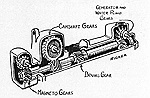
Timing Gears of the New Paige Six Engine, The Horseless Age, Jan. 6, 1915
Four closed models were also added to the series:
- Additional "Six-46" models
- Cabriolet, three-passenger, $1,600
- Coupé, three-passenger, $1,700
- Sedan, seven-passenger, $1,900
- Town car, seven-passenger, $2,250
The town car had room for a driver and one passenger in the open driving compartment and in the enclosed back section for three passengers on the back seat and two on auxiliary folding chairs. The town car "is a vehicle of pleasure and utility for the folks whose social position in a community demands exclusiveness and the ownership of the finest equipage." The driving compartment was upholstered in hand-buffed French glaze long grain leather of select quality.
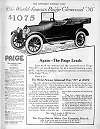
1915 "Four-36", The Saturday Evening Post, Jan. 9, 1915
Three distinct combinations of color and upholstery were available that would certainly have suited potential buyers in that day and age:
- Royal Blue body, black top, running gear in Valentine Moss Gray, and the interior in dark blue broadcloth or in light gray buff whipcord cloth.
- Brunswick Green body and running gear, black top, with the interior in gray Bedford cloth with a little green figure.
- Body in Battleship Gray, black top, running gear in Cleveland Gray with the interior in gray Bedford cloth with a light brown stripe.
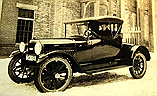
1915 Paige "Meadowbrook" (Found on the Internet)
The automobile industry in general was thriving! People everywhere were eager to replace their horse and buggy with an automobile. In 1915 Paige-Detroit wasn't the only manufacturer providing more car for less money. In the mid-priced range of six-cylinders cars it had plenty of competition, including Hupmobile, Studebaker, Buick, Overland, Moon, Auburn, Hudson, Velie, and Mitchell. A few, such as the Grant and the Saxon, cost less. And among higher priced six-cylinder autos were the Oakland, Kissel Kar, Apperson, Chalmers, National, Haynes and the air-cooled Franklin.
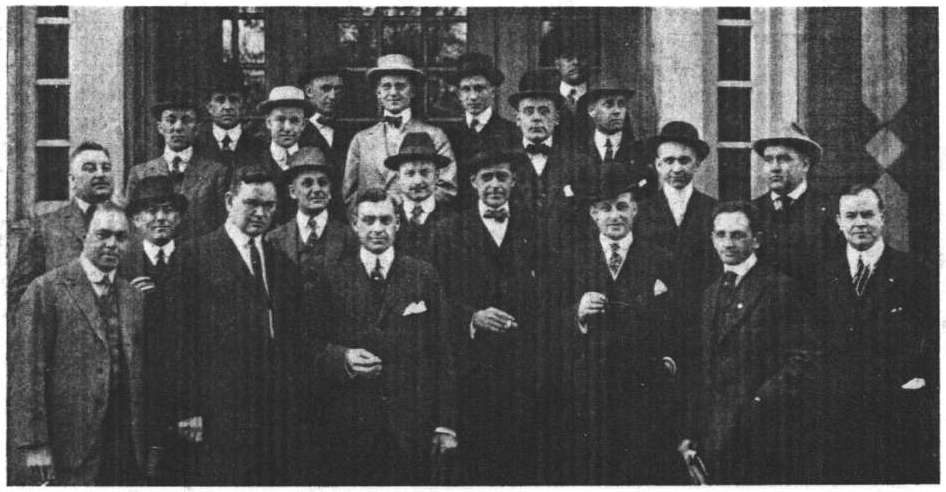
Paige-Detroit Increases Dividends. The Paige-Detroit Motor Co., Detroit, has increased its dividend from 4 to 7 per cent. a month, that for April having been at the rate of 84 per cent. a year. The company is capitalized at $250,000 and there are only 18 stockholders. The stock has a par value of $100, the last sale having been made on a basis of about $325. The company's net earnings are about $750,000, leaving a surplus of about $500,000 after the payment of dividends. The annual production is from 7000 to 8000 cars, including "fours" and "sixes." H. M. Jewett is president; E. H. Jewett, vice-president; William B. Cady, secretary, and Gilbert W. Lee, treasurer. (The Horseless Age, April 21, 1915)
 |
 |
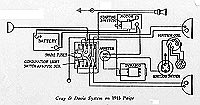 |
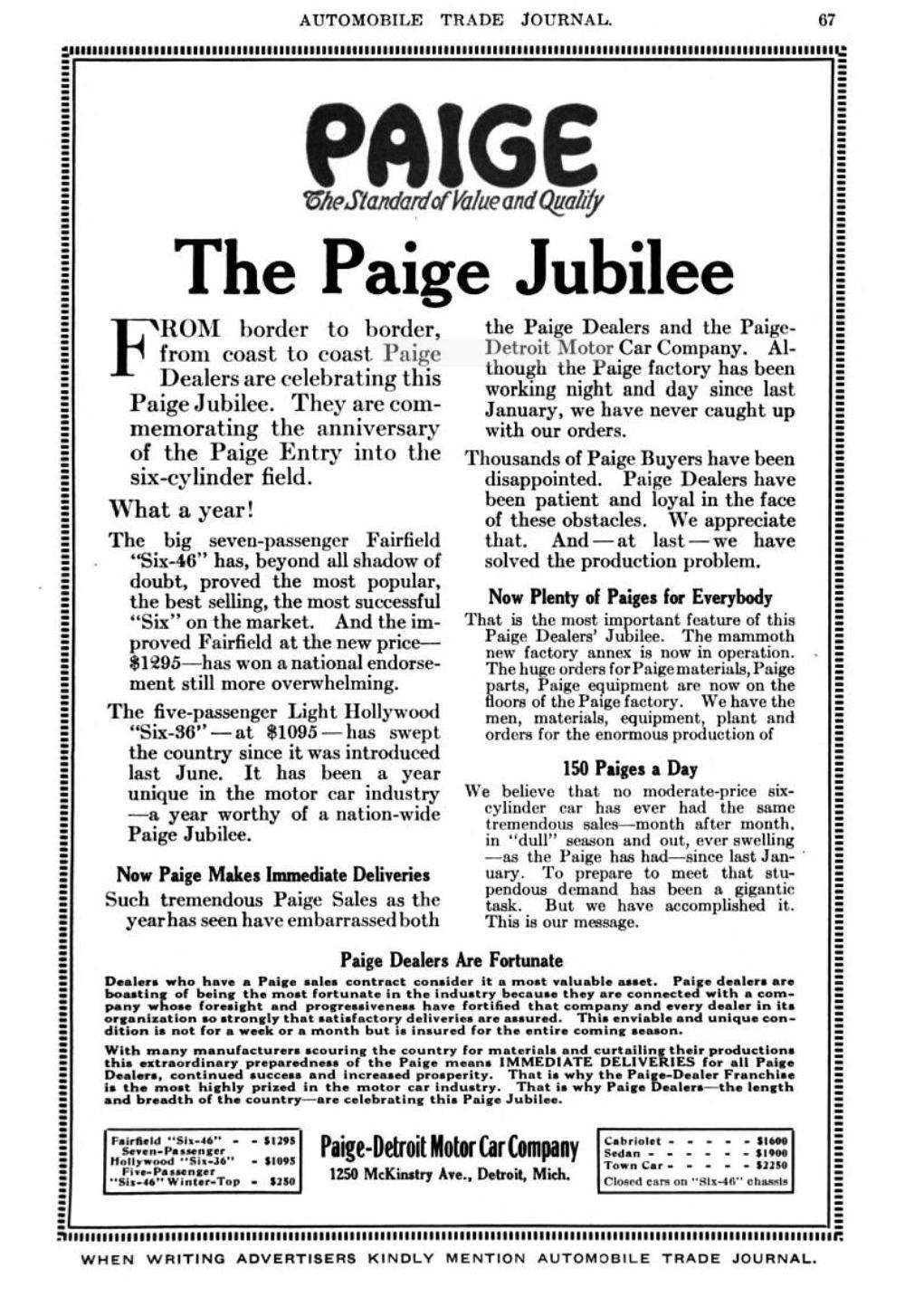
| Paige-Detroit Executives. The Horseless Age, May 19, 1915 | The Paige Jubilee. Automobile Trade Journal, October 1, 1915 | Gray & Davis System on 1915 Paige |
Elsewhere in 1915:
- The Budd Co. produces an all-steel body for Dodge.
- The Scripps-Booth Model C places the horn button in the center of the steering wheel; the car is also the first with electric door latches.
| < 1914 | 1916 > |