| < 1921 | 1923 > |
1922 First Jewett
| Nameplate: | Paige | Paige | Jewett |
| Model: | "Six-44" | "Six-66" | 18-22 |
| Cylinders: | 6 | 6 | 6 |
| Horsepower SAE: | 45 | 70 | 50 |
| Wheelbase: | 119 | 131 | 112 |
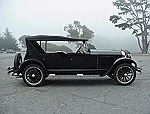
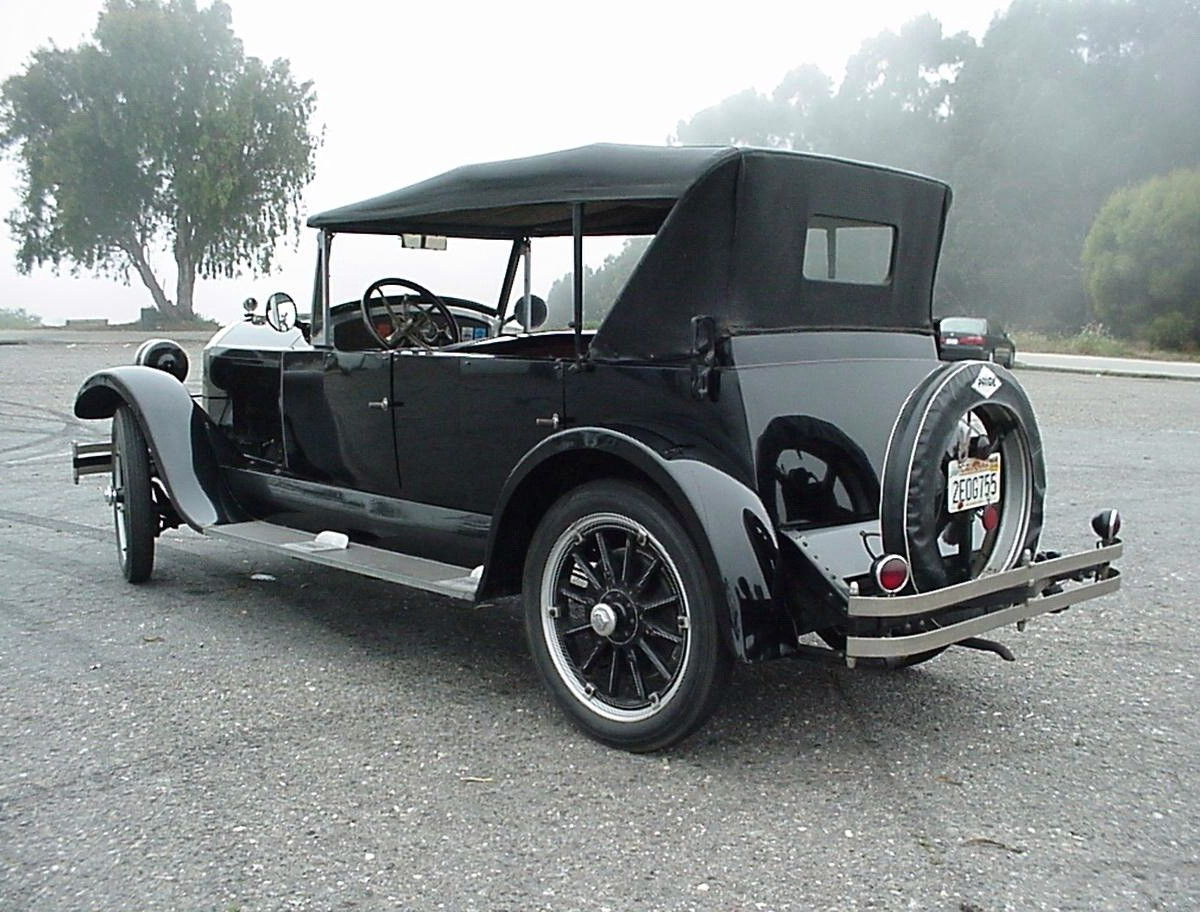
1922 Six-66 Larchmont II, (George Teebay collection)
For the 1922 model year, Paige continued its two series of cars: (1) the light six "Six-44" and (2) the big six "Six-66". The auto industry was beginning to recover from the 1921 economic slump, and Paige made significant price decreases. Paige autos still cost a substantial amount. However, they enjoyed a reputation for quality and modern styling.
A limousine returned to the lineup of big six models. It was identical to the 7-Passenger sedan with the exception of the glass partition between the front and rear compartments. In addition, the limousine's front compartment was upholstered in leather. Plus, a 6-66 chassis was available. The chassis had no body, top, windshield, instrument board, cowl or hood, but it did include all instruments and connections.
- "6-44" Series
- Touring, 5-Passenger, $1,465
- Sport Type, 4-Passenger, $1,595
- Roadster, 3-Passenger, $1,465
- Coupé, 4-Passenger, $1,995
- Sedan, 5-Passenger, $2,245
- "6-66" Series
- Touring, 7-Passenger, Lakewood, $2,195
- Sport Type, Larchmont II, $2,245
- Roadster, 3-Passenger, Daytona, $2,495
- Coupé, 5-Passenger, $3,100
- Sedan, 7-Passenger, $3,155
- Limousine, 7-Passenger, $3,350
The most distinctive Paige continued to be a new $2,495 version of the previous year's Daytona two/three-passenger speedster. As in 1921 the third passenger rode on a seat that pulled out from the body. This seat, when not in use, had a back that folded down and an armrest that folded in, allowing the seat to be pushed back into the car and locked there out of the way. The seat's right side was actually a metal door that was finished in the same color as the car body, so when it was retracted, the car appeared to have a golf bag compartment there. There was a footrest built into the right side running board that could be raised for use when the seat was out. The top could be completely removed "without a single tool and left at home in fair weather." It had cycle fenders and a rear-mounted spare. The Daytona was famous for its racy silhouette and pleasing lines, not to mention its speed.
 |
 |
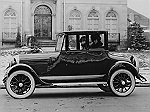 |
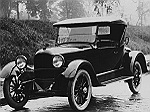
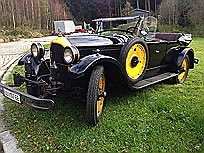
| 1922 Six-44 Roadster (AACA Library photo) | 1922 Six-66 (Stefan Barbaric photo) | 1922 Six-66 Coupe (AACA Library photo) |
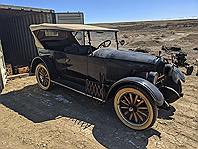
1922 Jewett Touring (Rodger Griffin photo)
In the fall of 1921 Paige-Detroit advised dealers of a new smaller, lighter and lower-priced car to add to their existing of 6-44 and 6-66 1922 models. The new car's specifications, its price, and its name were not announced. Even the identity of the manufacturer was not made public, except that it was expected to be identified with the strong Detroit interests behind Paige-Detroit. The November 19, 1921 issue of Automobile Topics Magazine carried a statement from President H.M. Jewett:
We will have many pleasant surprises for Paige dealers and prospective Paige dealers. Paige dealers will be in a particularly strong competitive position in 1922.
We recognize that buying habits have changed and that pocket books are thinner than they were. There is a very large class of people who want a car that is low in price, that is economical to operate and to maintain, but that is also beautiful, comfortable and with a performance second to none. Such a car can be produced and Paige dealers will have it. We believe the new car which our dealers will offer will be the sensation of the coming season.
To make the maximum profit today, a dealer should have a complete line, and he should be able to secure it through a single factory connection with all the advantages that accrue therefrom. He should have a fine car that is a truly superlative performer -- like the Paige 6-66 backed by its many records on speedway and hillclimb. This enables him to get the cream that lies in the quality field, and gives prestige.
He should have a fine car for the man of more moderate pocketbook -- like the Paige 6-44. And he must have was them a low-priced car that will enable him to reach the remaining class of prospects and to do a business of the real volume.
In early December of 1921 it was announced that the car would be named "Jewett" and that the new car would be built in the Paige plant by a separate working force and by a new company, Jewett Motors. The selling price, sales features and the car itself were to be shared with dealers during the New York Show in January, 1922. When it was introduced features of the new Jewett included: 112 inch wheelbase; 50 HP six-cylinder motor; drum-type headlights with nickel trim; glass rear window; and door-opening side curtains. The initial model was a touring car for five. A sedan went into production by the end of April:
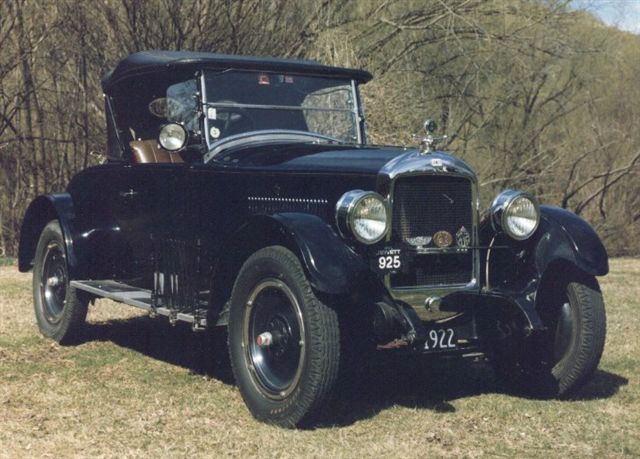
1922 Jewett Roadster (Wayne Jack photo)
- Jewett five-passenger touring car, $1,065
- Jewett five-passenger sedan, $1,395
Before too long, a two-passenger roadster and a four-passenger coupe were also being offered. There is disagreement, however, whether these two additions are properly 1922 models or 1923 models:
- Jewett two-passenger roadster
- Jewett four-passenger coupe
With the six-cylinder engine and other features, Jewett models were a good buy for the money. They were an instant success. Hudson had started the low-priced trend with its Essex, but the Essex was a four-cylinder car that cost about the same as the Jewett. When Studebaker entered the low-priced field, it, like Paige, named the car after its president, calling it the Erskine.
By the end of 1922 the company shipped 20,420 Jewett autos, compared to only 9,323 Paige models. A period of growth and prosperity had begun.
 |
 |
 |
||
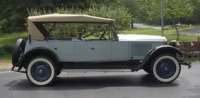
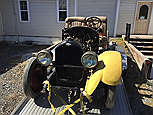
| 1922 Paige Larchmont II (Richard Paige collection) | 1922 Paige (Jay Givens photo) | Paige Daytona before 1922 San Francisco to Santa Monica Road Race (Martin Swig) |
 |
 |
 |
||
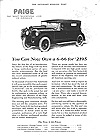
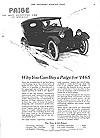
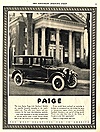
| 1922 Six-66 , Saturday Evening Post, March 4, 1922 | 1922 Six-44, Saturday Evening Post, April 8, 1922 | 1922 Six-66, Saturday Evening Post, Sept. 23, 1922 |
Elsewhere in 1922:
- Henry Ford buys the bankrupt Lincoln Motor Company for the bargain price of $8 million. Henry and Edsel Ford, father and son, switch from driving Marmon autos to driving Lincolns.
- Stutz offers left-hand drive as an option.
- George Frost invents the car radio.
- Instrument panels feature gasoline gauges.
- Some car models feature back-up lights.
| < 1921 | 1923 > |