| < 1925 | 1927 > |
1926
A "New-Day"
| Nameplate: | Paige | Paige | Jewett |
| Model: | 6-70 | 6-70 | 25-26 |
| Cylinders: | 6 | 6 | 6 |
| Horsepower SAE: | 73 | 73 | 40 |
| Wheelbase: | 115 | 125 | 115 |
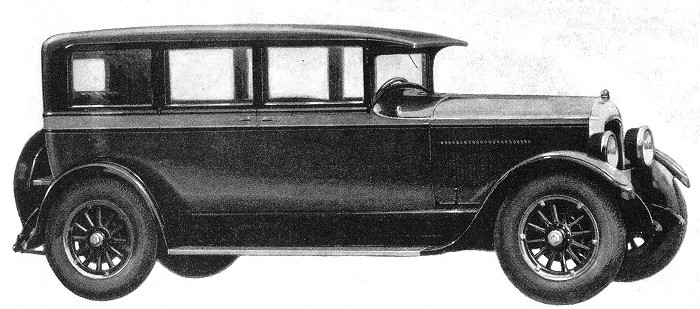
1926 Paige 5-passenger Sedan, Saturday Evening Post, July 3, 1926
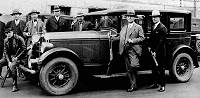
Sheriff Ellis Jones, Sacramento County, California, and his posse stand beside his 1926 Paige Sedan. (Ronald Cole collection)
For the 1926 model year Paige-Detroit proclaimed that a "new day" had arrived and that Paige and Jewett Sixes could best meet motorists' demands for comfort, handling and smartness. Winding paths and rutted roads had been covered with concrete or macadam, and everywhere traffic was congested. Only cars of a new type could hope to compete with this "New-Day" traffic.
"Long years ago, Paige-Jewett engineers foresaw the coming of this New Day and set about designing a car that would master . . . these myriad New Day problems." A prospective customer only had to drive a Jewett, for example, to "find . . . a performance more nimble, more brilliant, and more satisfying than . . . in any other car." Paige and Jewett Sixes were New-Day Cars for New-Day needs!
Initially, the Paige lineup consisted of five basic models. The standard sedan listed for $1495, and according to ad copy, "This handsome enclosed Paige will look at home beneath the porte-cochere of the most exclusive club or residence." New slender door pillars of sturdy construction promised maximum visibility for both the driver and passengers.
An interesting addition to the lineup appeared in the spring when a new two-door brougham was announced. It had a 115 inch wheelbase, smaller brake drums, smaller springs and tires, and wood wheels standard. This model listed at just $1,295, the lowest price ever for a Paige.
- Paige
- Brougham, $1,295
- Sedan, 5-passenger $1,495, De Luxe $1,670
- Sedan, 7-passenger, De Luxe $1,995
- Cabriolet Roadster, $2,295
- Suburban Limousine, $2,245
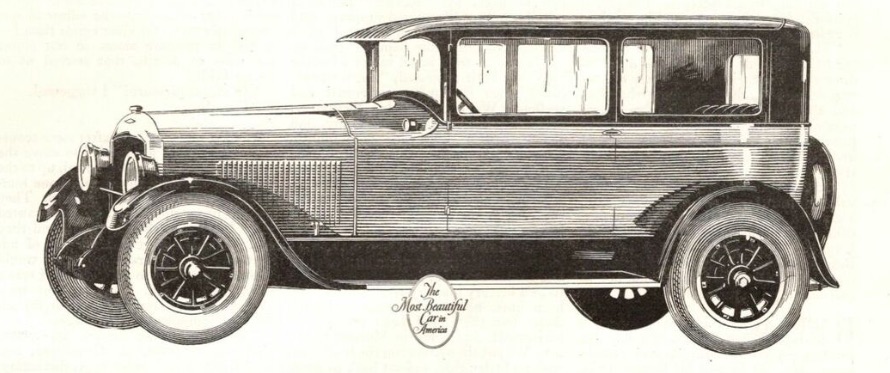
1926 Paige De Luxe Sedan (Richard Paige collection)
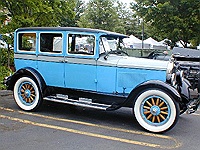
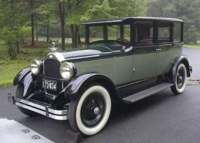
1926 Paige Sedan (James Bacon collection)
Paige shortened the wheelbase to 125 inches, a somewhat substantial reduction. However, company sales literature proclaimed the new cars were as roomy as the previous models, and they were every bit as easy riding. But, because of the shorter wheelbase, "You will find the car easier to handle and to park, more economical to operate, better adapted to new-day driving conditions." Down-sizing was already in!
The large six-cylinder engine now developed 72 HP. Paige hydraulic four-wheel brakes were standard, and all models were finished with two-tone durable lacquer on the bodies and black running gear. Wood wheels were standard on the standard sedan, while steel disc wheels were standard on all the rest.
Probably the most distinctive Paige for 1926 was the collapsible top cabriolet roadster. Seats in the front and the rumble seat area were finished in Spanish leather with a decorative design embossed in the surface. It had interior hardwood trim with a unique inlaid design and nickel-plated bullet-type headlights. The doors were hinged at the rear and opened at the front. The belt-line that separated the two colors was not just a line along the side. Instead, it had a little zig-zag that gave the car some extra pizzazz. This car listed for $2,295.
 |
| 1926 Jewett Touring Car |
The Jewett line consisted of a touring car and sedan:
- Jewett
- Sedan, 2-door $995, De Luxe $1,095
- Touring car, $1,095
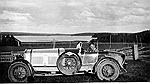
Olle Anger in a 1926 Paige with a custom body, about 1930 near Lingbo, Sweden (Lars Anger collection)
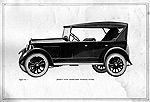
1926 Jewett Five Passenger Touring Model (Jewett Reference Book, Third Series)
This new, smaller series had a 109 inch wheelbase, was powered by a smaller six-cylinder engine that produced 40 HP and had hydraulic four-wheel brakes. The sedans both had metal bodies built by Murray Body Corp. that featured reduced-size corner pillars, window frames, and door posts. Company publicity claimed the interiors were just a roomy as the larger Paige models.
The deluxe sedan cost $100 more than the standard version. For that extra $100 the motorist got steel disc wheels, bumpers, a motometer, a nickel-plated radiator shell, and the more modern Paige-type roof that extended over the windshield as a permanent visor. It was still somewhat boxlike, but not a bad buy for the price.
Most companies in the car business were now selling more and more cars as the Roaring Twenties really got into high gear, but Paige fell behind as About 6% to 37,222 cars of all types.
 |
 |
|
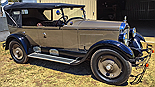
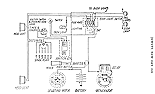
| Custom-bodied Australian 1926 Paige 6-70 (Michael Pitts collection, Steve Williams photo) | 1926 Jewett Wiring Diagram. Automobile Trade Journal, March, 1927 |
$10,000 for a Name
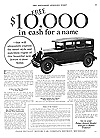 |
| $10,000 in Cash for a Name, Saturday Evening Post, October 2, 1926 |
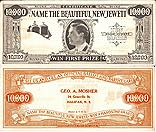 |
In October, 1926, Paige-Detroit announced a contest for a name or phrase that best described a new Jewett 4-door sedan. The prizes were significant. First prize was $10,000 cash; the second and third prizes were the 4-door sedans themselves. The contest was open to residents of the U.S. and Canada over 14 years of age.
Contest judges were company president H.M. Jewett, advertising authority C.W. Brooke, and poet Edgar A. Guest. They were looking for a name or a phrase (6 words max.) "that will best express the style - the charming beauty - the perfect taste - the matchless vogue" of the new car. Contestants also had to supply a reason for their selection, perhaps the words that readily suggested themselves when the prospective customer sat on its "choice mohair upholstery" or grasped its "solid walnut steering wheel", among other sensations.
Contestants had to act quickly, because official ballots, available at local dealers, had to be returned to the dealers to meet the October 31 deadline. Over 400,000 entries were submitted by the end of the month.
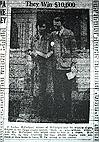 |
| They Win $10,000. Parkersburg News, Parkersburg, WV, January 9, 1927 (Larry Headlee collection) |
 |
| Contest Winners. Saturday Evening Post, January 29, 1927 |
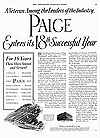
The contest concluded with a small announcement at the bottom of a Paige ad that appeared in January, 1927. There was no name for the new sedan among the winners. Instead, all were slogans. Any reference to the Jewett, which by then had been discontinued, was dropped. Instead, the second and third prizes were identified as Paige 6-45 models. Plus, it does not appear any of the slogans were subsequently used by Paige.
First prize ($10,000.00 cash): J. Luther McFarland, Cairo, West Virginia, for the slogan "Built to Win - Without, Within".
Second prize (a new 6-45 sedan): Mrs. Walter F. Halleck, New Berne, North Carolina, for the slogan "Satisfaction Mounts with Every Mile".
Third prize (a new 6-45 sedan): F. A. Dragoun, Peoria, Illinois, for the slogan "Commands Respect on Any Road".
 |
 |
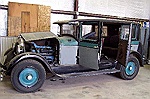 |
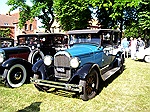
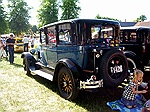
| 1926 Paige Sedan in Denmark (Jan Raff Andersen photo) | 1926 Paige Sedan in Denmark (Jan Raff Andersen photo) | 1926 Paige Sedan (Willis Clark photo) |
 |
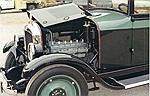 |
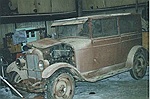
| 1926 "New Day" Jewett - Before and After (Harlen O. Elliott collection) | |
 |
 |
|
 |
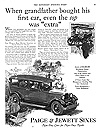 |
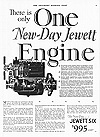
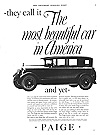
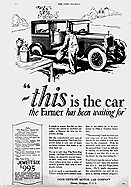
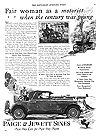
| There is only One New-Day Jewett Engine, Saturday Evening Post, February 27, 1926 | - they call it "The most beautiful car in America" and yet - , Saturday Evening Post, March 13, 1926 | - this is the car the Farmer has been waiting for, The Farm Journal, May, 1926 | Fair woman as a motorist - when the century was young, Saturday Evening Post, August 14, 1926 | When grandfather bought his first car, even the top was extra, Saturday Evening Post, August 28, 1926 |
Elsewhere in 1926:
- Route 66, a paved highway from Chicago to Los Angeles, is opened.
- Pierce-Arrow truck engineer Francis W. Davis demonstrates the first power-steering system.
| < 1925 | 1927 > |