| < 1926 | 1928 > |
1927
Last Jewett-built Paige
| Nameplate: | Paige | Paige | Paige | Paige |
| Model: | 6-45 | 6-65 | 6-75 | 8-85 |
| Cylinders: | 6 | 6 | 6 | 8 |
| Horsepower SAE: | 43 | 64 | 68 | 80 |
| Wheelbase: | 109 | 115 | 125 | 131-1/2 |
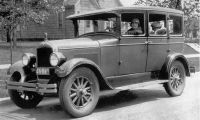
1927 6-45 5-passenger sedan. Mrs. Helen M. Paige, daughter-in-law of Frederick O. Paige, and 8-year old son Frederick O. Paige III, Hammond, Indiana, 1927 (Richard Paige collection)
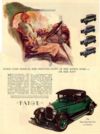
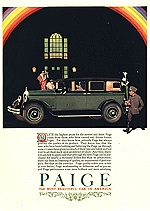
Paige Cars Mirror Her Individuality As Her Gown Does - Or Her Hat! The Ladies' Home Journal, Jan. 1927
The year 1927 was one of dramatic change for Paige-Detroit. The Jewett line was re-branded as the Paige 6-45. An eight-cylinder model was introduced in March. The month of July saw a change of ownership.
As the year began there were over a dozen models in all, priced at the time of introduction from $1,150 to $2,245 for the 6-75 seven-passenger limousine. Most models had two-tone bodies, some offered disc wheels as standard, all came with a spare demountable rim (but no spare tire). Bumpers were optional on all. All enclosed cars had a continuous roof visor.
A fourth series, the 6-40, was shown as part of the 1927 range, but there is no evidence it ever went into production. The specifications for the model show a smaller engine and smaller tires than the 6-45.
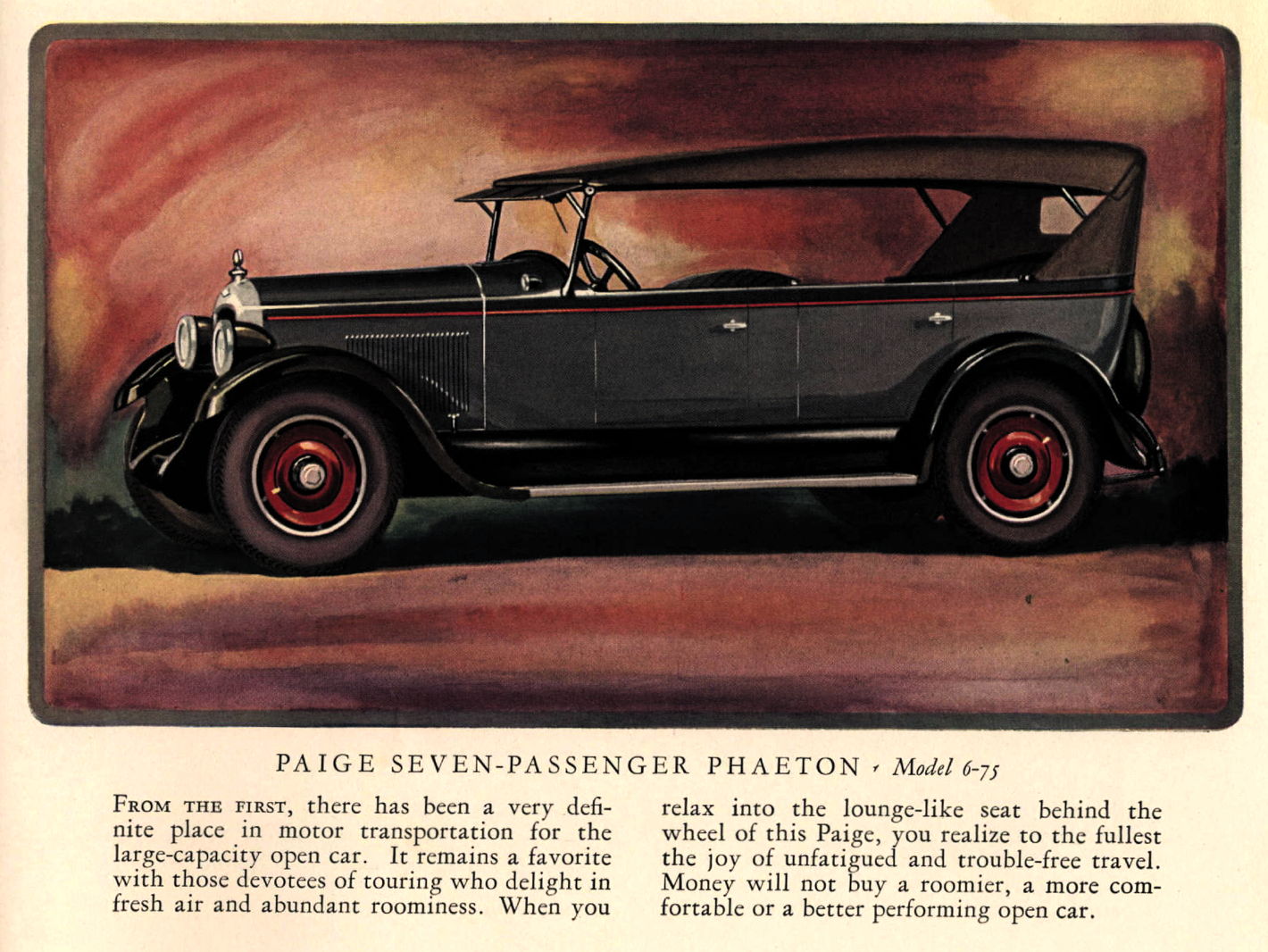
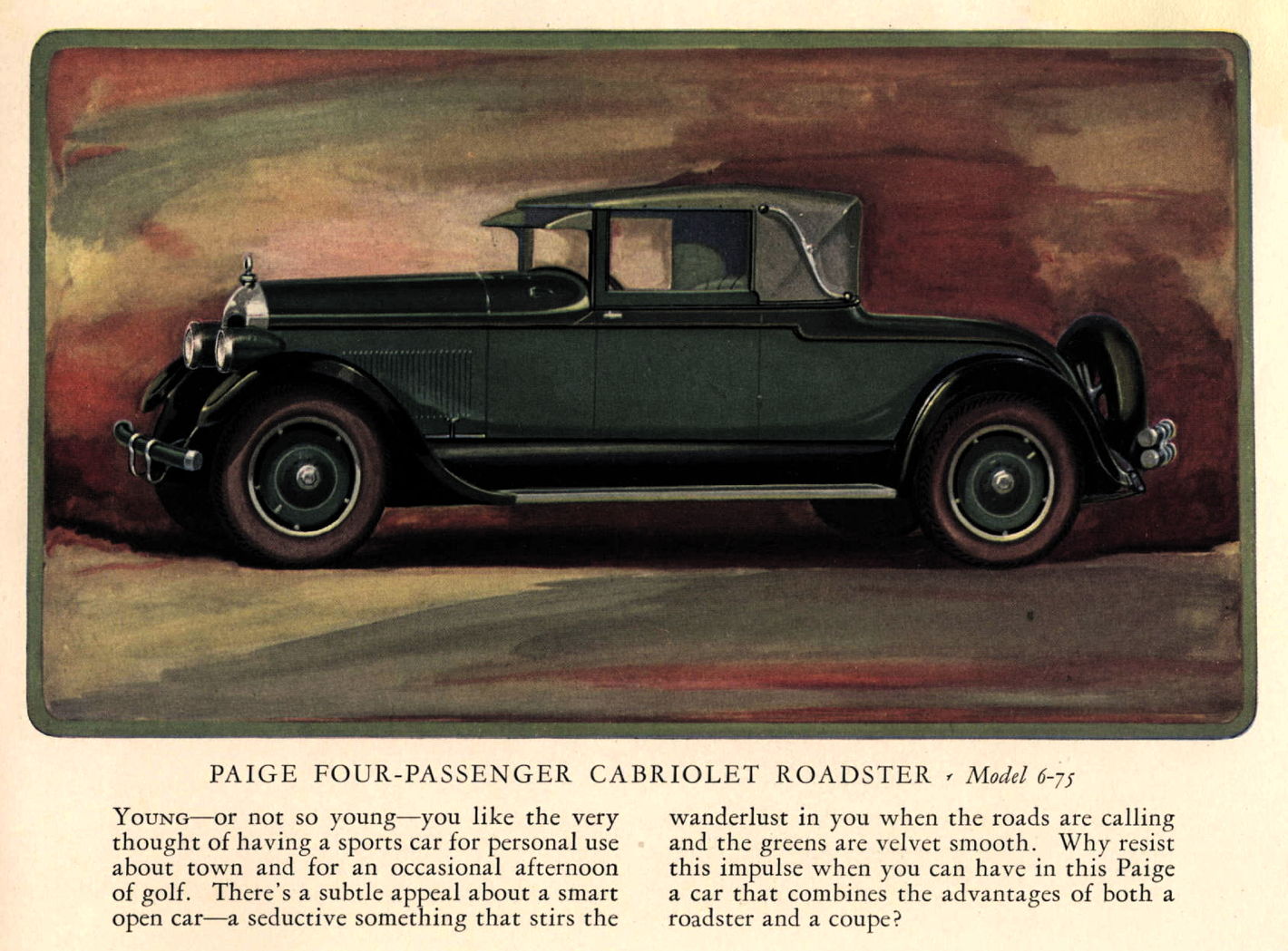
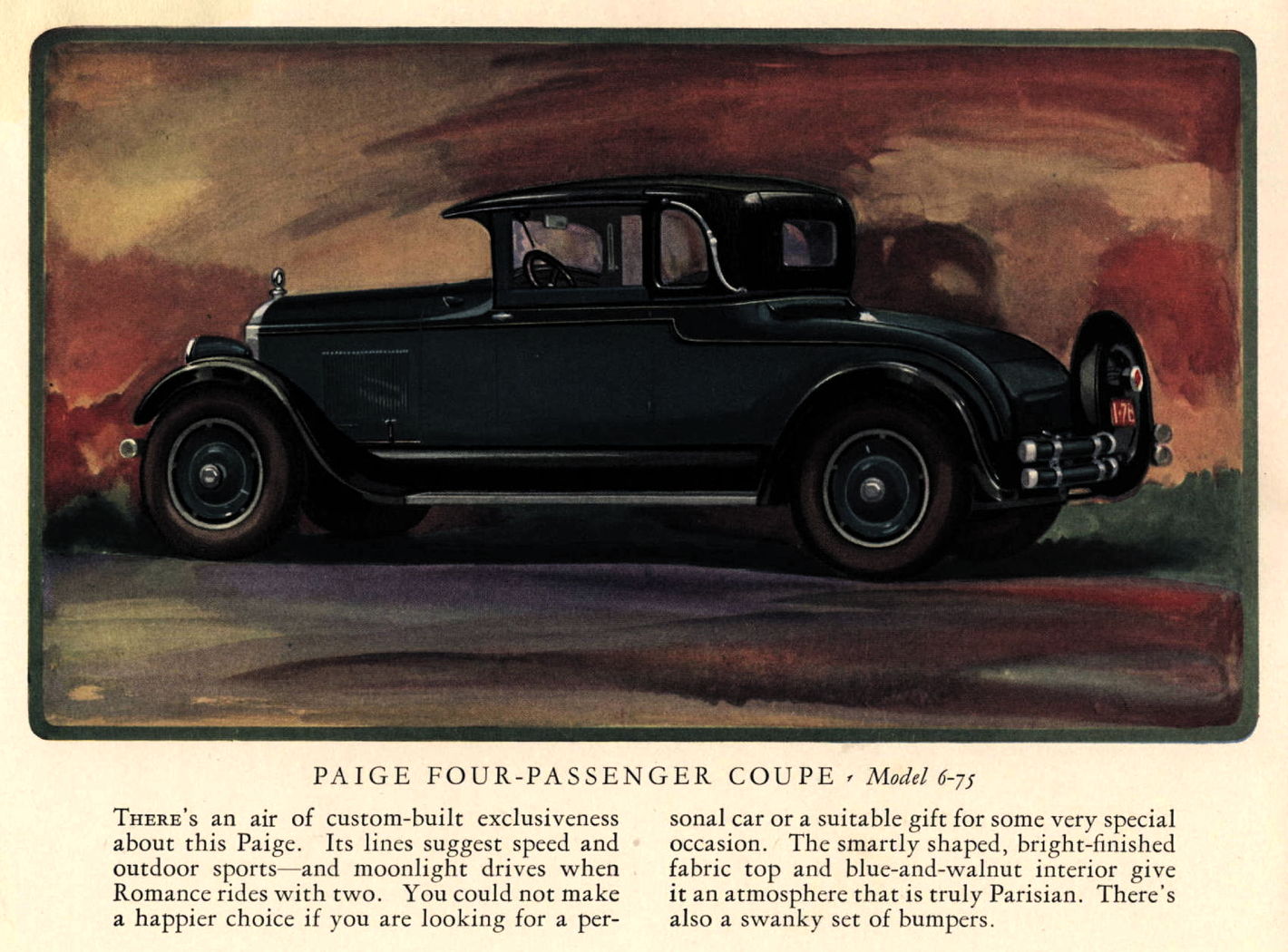
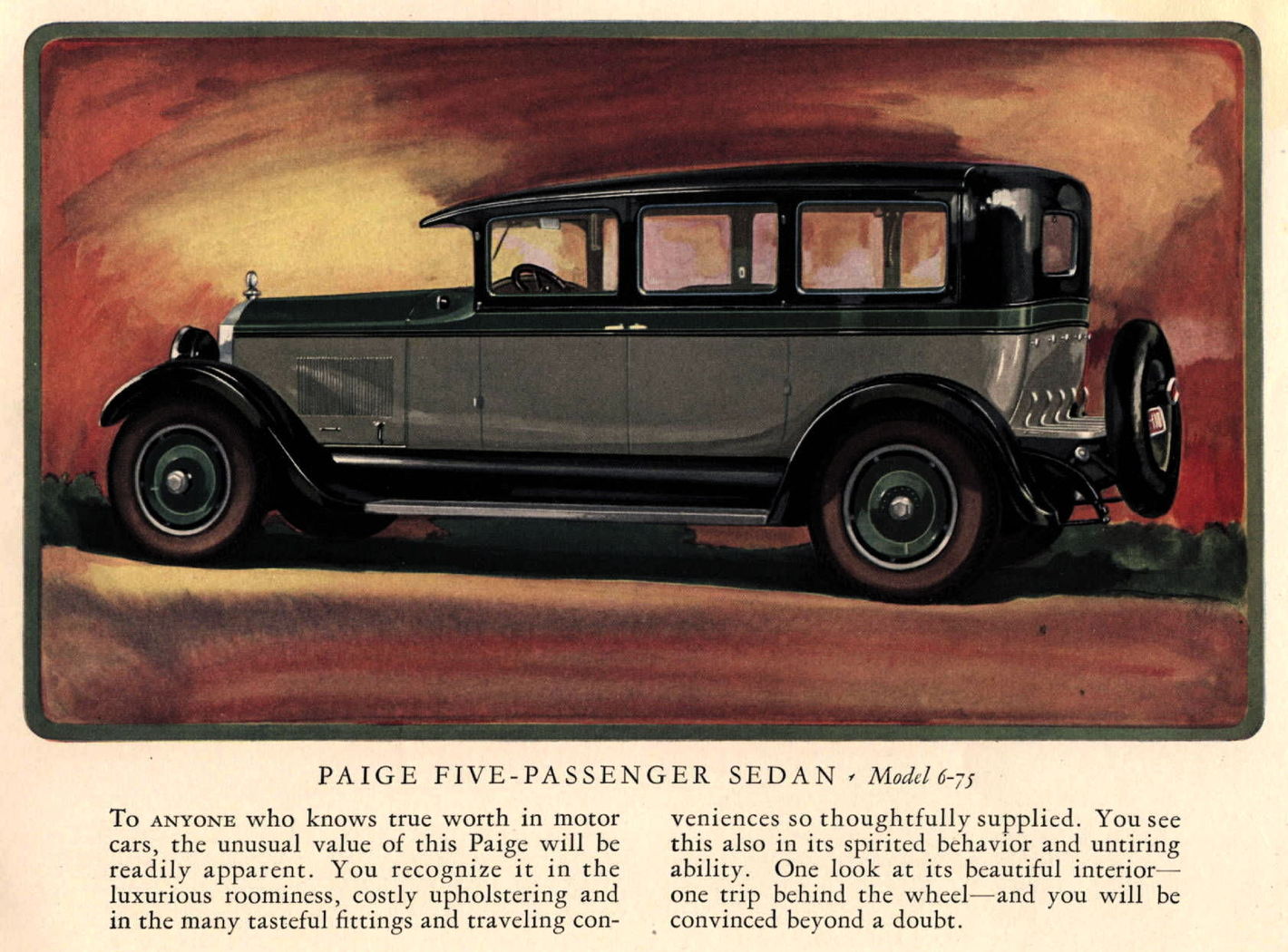
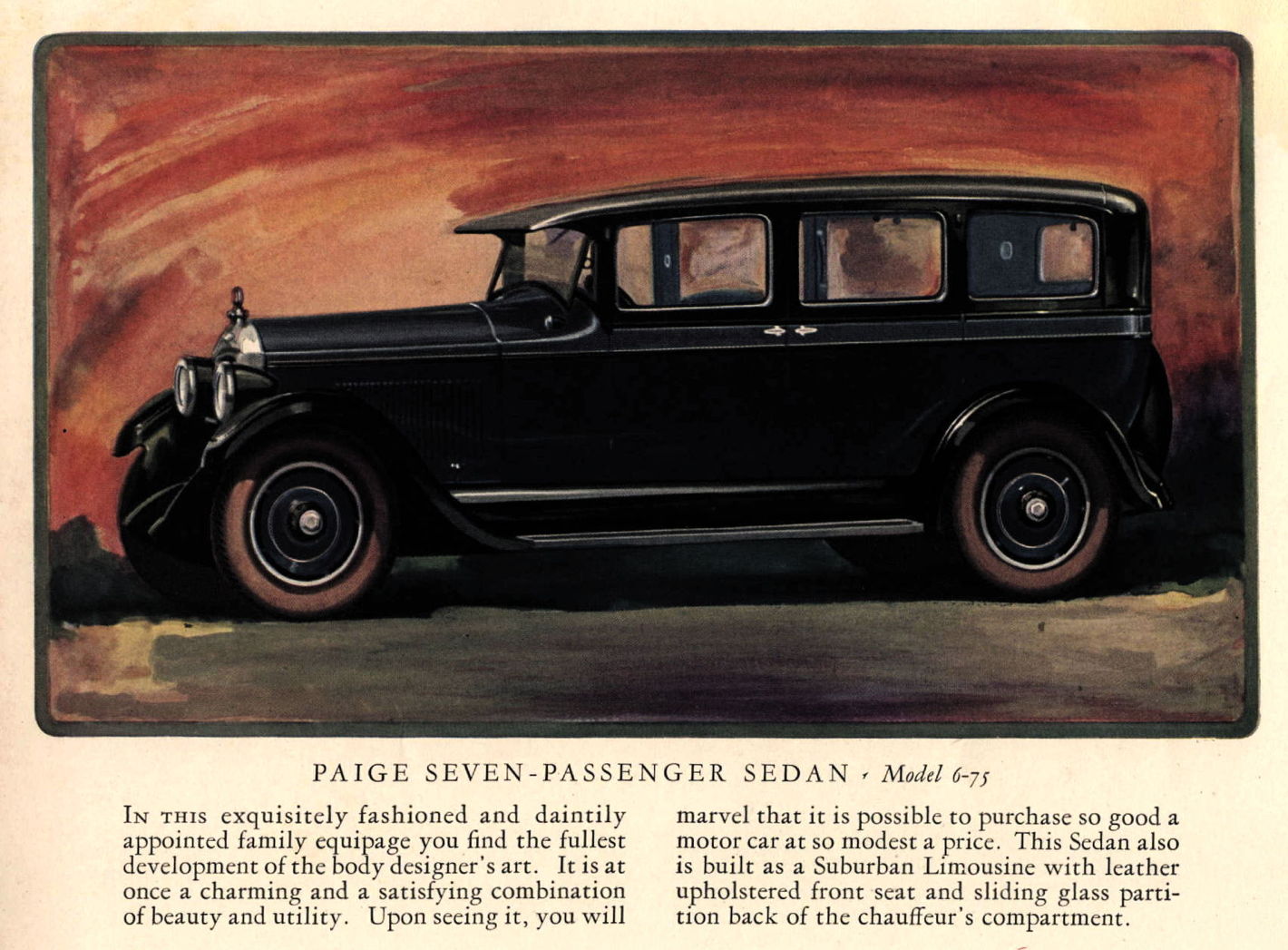
The 6-45 had the 109-inch wheelbase of the previous year's Jewett. The Paige 6-65 Series had the 115-inch wheelbase that had been introduced during 1926 for the 2-door Brougham sedan, and it now included three models: landau brougham, sedan and roadster. Finally, the Paige 6-75 Series rode on the 125-inch wheelbase carried over from 1926 and included four models: 5- and 7-passenger sedans, cabriolet, and coupe. Also, with a leather-upholstered front seat and a sliding glass partition the 7-passenger sedan was sold as a limousine. A sixth 6-75 model, a 7-passenger phaeton, was shown in company literature, but it is unclear if one ever left the factory.
- Six-45
- Brougham, 5-passenger, $1,095
- Cabriolet Roadster, 4-passenger, $1,295
- Coupe, 2-passenger, $1,095
- Sedan, 5-passenger, $1,195
- Touring, 5-passenger, $1,150
- Six-65
- Brougham, $1,395
- Landau Brougham, 5-passenger, $1,395
- Sedan, 5-passenger, $1,495
- Sports Roadster, 4-passenger, $1,495
 |
 |
 |
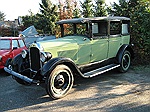
| 1927 6-65 Sedan, (Fritz Bosma collection) | ||
- Six-75
 |
 |
 |
| 5-pass. Sedan | Cabriolet | Paige 7-pass. Sedan |
Jewett Name Retired
The Jewett name was retired. All cars were again Paige automobiles. The nearby January 1927 Ladies Home Journal ad mentioned Paige-Jewett motor cars, but the January 6, 1927 "National Shows" issue of Motor Age Magazine carried the news that 6-45 models will be known as a Paige car, instead of Jewett as before. The price of the sedan and touring car was reduced by $100. Paige added two new bodies on the 6-45 chassis, a coupe at $1095 and a cabriolet at $1295.
Straightaway Eight
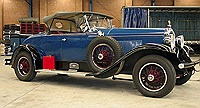
1927 8-85. Note the right-hand drive on this custom Australian Paige. (Neville Storey collection)
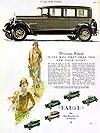
Fortunate, Indeed, is She Who First Owns This New Paige "Eight", The Ladies' Home Journal, May, 1927
In March Paige announced the Straightaway Eight Series, powered by a Lycoming L-head straight eight-cylinder engine with 298.6 cubic inch displacement that developed 80 HP at 3000 RPM. The wheelbase on these was back up to 131-1/2 inches, last used in the Paige 6-70 of 1925. The Straightaway Eights included a Warner Hi-Flex four-speed transmission, introduced for the first time in these models. Third gear was high gear. Fourth was actually overdrive that could be used on runs that required very little torque or propelling force to maintain speed. With fourth gear in use, a driver could reduce gasoline consumption by about 20%.
The new 8-85 series included six models with prices ranging from $2,315 up to $2,905. It resembled the 6-75 in most respects except for the larger engine and the transmission. Some models featured three-tone finishes, others just two. Wood wheels were standard, but discs were a $15 option. Bumpers remained optional, too. The seven-passenger sedan with disc wheels and sturdy bumpers made a truly imposing sight. A bulletin in the April 21,1927, issue of Motor Age indicated that the Paige-Detroit Co. of New York had ordered 500 Paige cars on April 16, including 64 of the new Eights, with a total value of $753,740.
- Eight-85
- Cabriolet, 4-passenger, $2,655
- Coupe, $2,655
- Limousine, $2,795
- Phaeton, 7-passenger, $2,295
- Sedan, 5-passenger, $2,355
- Sedan, 7-passenger, $2,655
 |
 |
 |
 |
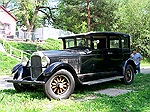 |
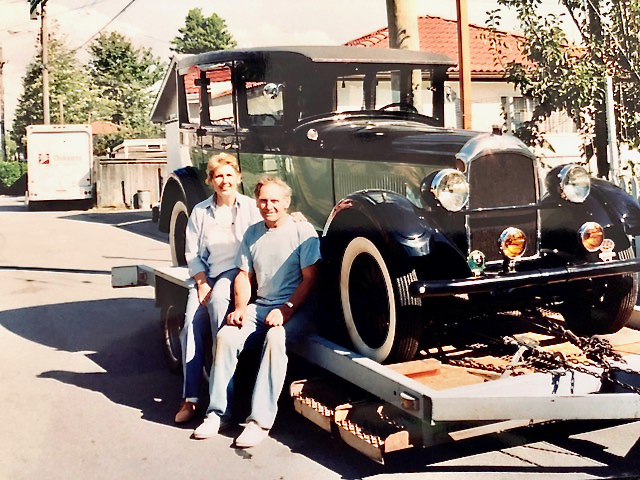
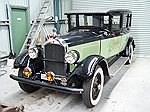
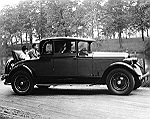
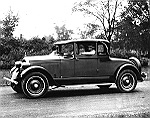
| Don and Marjorie Scott with their 1927 8-85 Paige sedan (Lyndon Throness collection) | 1927 8-85 Sedan (Neville Storey collection) | 1927 Paige 8-85 Cabriolet (AACA Library photos) | 1927 8-85 Paige Sedan (Charlie Kidder collection, Neville Storey photo) | |
Graham Brothers Buy Paige
Finally, the company was about to change hands. For years the company had been highly prosperous but had recently shown declining earnings. For 1926 net profits were a fraction of those for 1925. Sales for the first quarter of 1927 were one-third of those for the first quarter of 1926, and the company was losing money. In The Wall Street Journal, May 5, 1927, President W. A. Wheeler said:
Despite the unfavorable conditions under which the company operated earlier in the year its loss for the entire quarter was slight compared with the losses sustained by the subsidiaries, because the selling season was slow in getting under way. . . Outlook for the remainder of the year [is] good. There has been a steady increase in the sale of all models since the selling season opened, particularly on the new eight cylinder model. . . The eight cylinder model with its new transmission has met with decided public approval in both domestic and foreign markets. The increased number of models manufactured by the company has given it a greater market and has met with the approval of Paige dealers.
Whether it was the trend in sales, the profitability of the company or the challenge of manufacturing a well-engineered automobile, Harry Jewett had begun considering his options. At the same time Paige-Detroit attracted the notice of truck-making brothers Joseph, Robert and Ray Graham. The Graham brothers had sold their automotive interests in the previous year, and they were looking for an opportunity to get back into the industry.
GRAHAMS IN CONTROL OF PAIGE-DETROIT
Jewett Interests Sell
. . . At a meeting of the Board of Directors of the Paige-Detroit Motor Car Company, held in Detroit yesterday, a contract was entered into between the company and Messers. Joseph B., Robert C. and Ray A. Graham, which contract, when ratified by the stockholders of the Paige-Detroit Motor Car Company, will pass the controlling interest in and the management of the company to the Graham Brothers, [who] will acquire at this time all of the common stock now owned by the Jewett interests. . . .
The Paige-Detroit Motor Car Company is a Michigan corporation, which has, since its origin in 1909, manufactured motor cars in the medium price field. Within the last three years it has completed one of the most modern plants in the industry. . . .
The Graham brothers entered the motor truck industry in 1916, when they established the Indiana corporation Graham Brothers, which has since become the largest exclusive manufacturer of motor trucks. In 1925 the Graham bothers went into Dodge Brothers as the chief executive officers and withdrew from that company in 1926, when they sold their entire interests in Dodge Brothers and Graham Brothers Truck Company.
The present Paige line of eights and sixes, offering a selection of twenty body types on four chassis, will be continued.
New York Times , Thursday, May 5, 1927
On June 10, 1927, Harry Jewett and the rest of the old management retired. Joseph B. Graham became the president, Robert C. Graham became vice-president, and Ray A. Graham became the secretary-treasurer.
After leaving Paige-Detroit Harry M. Jewett was president of Colonial Laundry Co. of Detroit. He died of a heart attack, June 16, 1933, in his sixty-second year.
In 1944 the State of Michigan acquired a 4300-acre tract of land in Ogemaw County, 140 miles north of Detroit, that had belonged to Jewett. A 12-acre lake on the property, originally named Dollar Lake, was renamed Jewett Lake. Today this lake and others in the area comprise Michigan's Rifle River State Park.
 |
 |
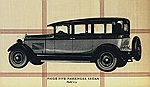 |
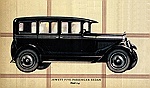
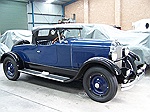
| 1927 Jewett Five-passenger Sedan, Model 6-45, MoToR, January, 1927 | 1927 6-75 Roadster (Neville Storey collection) | 1927 Paige Five-passenger Sedan, Model 6-75, MoToR, January, 1927 |
 |
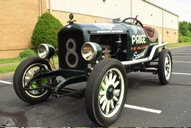 |
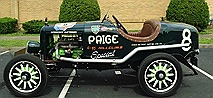
| 1927 Paige with custom body (Bob Hutson photo) | |
 |
 |
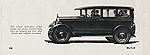 |
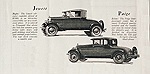
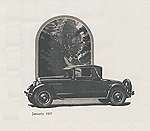
| 1927 Jewett cabriolet roadster and 1927 Paige coupe, MoToR, January, 1927 | 1927 Paige 4-passenger Cabriolet Roadster, MoToR, January, 1927 | 1927 Jewett Four-door Sedan, MoToR, January, 1927 |
 |
 |
 |
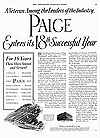 |
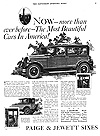
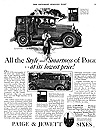
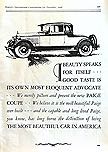
| Now - more than ever before - The Most Beautiful Cars In America! Saturday Evening Post, October 23, 1926 | All the Style and Smartness of Paige - at its lowest price! Saturday Evening Post, November 6, 1926 | If Beauty Speaks for Itself . . ., Hearst's International-Cosmopolitan, December 1926 | A Veteran Among the Leaders of the Industry. Saturday Evening Post, January 29, 1927 |
 |
 |
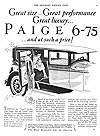 |
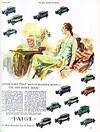
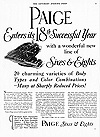
| Motor Cars That Match Milady's Mode - Yes, Her Every Mood! The Ladies' Home Journal, February, 1927 | Paige Enters its 18th Successful Year. Saturday Evening Post, February 12, 1927 | Great size, Great performance, Great luxury. Saturday Evening Post, May 21, 1927 |
Elsewhere in 1927:
- Ford ceases Model T production after 18 years and more than 15 million cars.
- Harley Earl designs the LaSalle for Cadillac.
- Chrysler produces the first Plymouth and DeSoto motor cars and buys Dodge.
| < 1926 | 1928 > |